Cyber attacks continue to be an ever-constant danger. The 2024 Cyber Security Breaches Survey confirms this with stark data. 50% of UK businesses suffered cyber incidents in the past year. This isn’t just an unsettling statistic; it’s a wake-up call. Cybercriminals are persistent, innovative, and relentless, attacking organisations of all sizes. SMEs often believe they’re too small to be targeted, but these numbers prove otherwise.

Why Are Cyber Attacks So Common? Cyber attackers target businesses with varying strategies, from ransomware to data theft. Their tactics evolve constantly, exploiting unpatched vulnerabilities and user naivety. Phishing alone impacts over 80% of businesses annually, showcasing the weaknesses inherent in human error. Many organisations still run under outdated beliefs, trusting in basic security measures while attackers upgrade their playbooks daily.

The Cost of Inaction Cyber incidents don’t just result in a few hours of downtime or an annoying PR mishap. The financial toll can cripple a business. Reputational damage lingers long after restoring systems, leading to lost clients and missed opportunities. SMEs find this reality especially harsh, as recovery resources are often limited. Look at Carpet Right as an example

Cyber Essentials: A Practical Starting Point So, how do businesses push back? Start with Cyber Essentials, a government-backed certification that improves your organisation’s security posture. It’s not just a checklist; it’s a comprehensive approach that helps businesses protect themselves from 80% of common threats. Equate Group offers tailored Cyber Essentials services, guiding your business through certification and ensuring compliance with essential practices.

Why Choose Equate for Cyber Essentials? At Equate Group, we go beyond the basics. Our experts have decades of industry experience and know the ins and outs of cybersecurity. We help you assess risks, implement proactive measures, and achieve certification seamlessly. Protecting your business means more than ticking a compliance box; it’s about embedding security into your operations.

Next Steps Don’t wait for an incident to make cybersecurity a priority. Equip your business with the tools and strategies needed to defend against threats. Invest in Cyber Essentials certification through Equate Group and transform your approach to cybersecurity from reactive to proactive.

Contact us to start your Cyber Essentials journey today. Make sure your business isn’t just another statistic in next year’s survey.

It seems like the cyber world never rests, and this time, it’s DHL—again. The logistics giant has had its fair share of cybersecurity challenges, but the recent cyber incident involving Microlise, a third-party telematics provider, has put DHL in a tough spot (Fleet News). If you’re in logistics or any industry relying on an intricate web of supply chains, this is your sign to take a good, hard look at your cybersecurity posture.

The Knock-On Effect: One Weak Link, Big Consequences

The attack on Microlise didn’t just affect their operations; it caused ripple effects that disrupted DHL’s ability to track fleets and manage logistics smoothly. It’s a textbook example of how dependent organisations are on their partners’ cybersecurity practices. Your supply chain is like a string of Christmas lights—if one bulb goes out, the rest might as well not exist.

But Wait, Didn’t DHL Just Have a Breach?

Yes, they did. Back in June 2023, DHL was hit by the MOVEit vulnerability, exploited by the Clop ransomware group, compromising personal data including payroll numbers and National Insurance details (Leigh Day). This serves as a reminder that attacks don’t just come in one flavour—they can strike directly or sneak in through third parties.

Compliance Isn’t Enough

Many organisations tout their compliance with standards as a badge of honour. Don’t get me wrong, it’s necessary, but in the same way that a seatbelt is necessary in a car crash—it helps, but it’s not the whole solution. This case demonstrates that even if your own cybersecurity is top-notch, you’re still exposed to risks from third parties. Compliance should be a starting point, not the final destination (ISACA).

Phishing and Human Error: The Classic Duo

It’s not always advanced exploits or elite hacking teams that get the job done; sometimes, it’s just Bob in Accounts who can’t resist clicking on “You’ve Won a Prize!”. DHL knows this better than most—back in 2021, they were the most impersonated brand in phishing scams, making up 23% of global phishing attempts (Check Point). Educating employees and fostering a culture of vigilance can’t be stressed enough (Verizon Data Breach Investigations Report).

The Path Forward: Lessons Learned

So, what’s the takeaway from all of this? First, partner vetting should be as thorough as the security checks at an international airport. If your partners can’t demonstrate a proactive, robust approach to cybersecurity, then it’s time to rethink that relationship. Implementing multifactor authentication that goes beyond SMS-based codes is crucial (NCSC). And don’t forget about continuous, engaging security training for your teams—because Bob from Accounts isn’t going anywhere.

Final Thoughts

The DHL incident is more than a cautionary tale; it’s a clarion call for businesses to revisit their supply chain security strategies. Ensuring the strength of your security measures and those of your partners can be the difference between a minor inconvenience and a major crisis. At (Equate Group), we help organisations build resilience across their entire supply chain, from partner assessments to comprehensive cybersecurity strategies. It’s not just about patching the holes; it’s about reinforcing the entire structure.

In today’s world, securing your supply chain isn’t just an IT task—it’s a business imperative. So, as we learn from DHL’s latest challenges, remember: when it comes to cybersecurity, you’re only as strong as your weakest link. And sometimes, that link isn’t even in your office; it’s halfway across the world, sipping a coffee next to a suspiciously outdated server.

Apple’s Hardware Parade, Google’s AI Flex, and More

This week in tech: Apple paraded new gadgets, Microsoft threw shade at Google, and AMD got ready to challenge Nvidia. Let’s dive into the highlights.

Microsoft Points Fingers at Google

Microsoft accused Google of playing dirty in Europe. Google allegedly used the Open Cloud Coalition as a front to nudge regulators against Microsoft’s Azure cloud. Classic move. This accusation came after Google cried foul. Google claimed that Microsoft’s licensing deals are unfair. They make competitors pay a high price to use Windows servers. The cloud wars rage on.

Google’s AI-Fueled Profit Party

Google’s parent, Alphabet, boasted about a 34% jump in profits. Why? AI, baby. Cloud services and generative AI gobbled up demand. Sundar Pichai said over 25% of their new code now comes from AI. Impressive. Or terrifying. Depends if you’re a coder or not.

Apple’s Mac Mini Redesign: Power Button Shenanigans

Apple shrunk the Mac Mini for the first time since 2010. It’s now 40% smaller. Cute, right? But they stuck the power button on the bottom. Because why make sense when you can troll? On the bright side, Apple put USB-C ports and a headphone jack at the front. Small victories.

AMD’s New GPU Plans: AI on the Horizon

AMD confirmed the RDNA 4 GPUs launch early next year. They’re adding AI-based noise reduction and dedicated AI hardware. Basically, they’re borrowing ideas from Nvidia but hopefully leaving out the absurd price tags. Fingers crossed for the PC gamers’ wallets.

Apple Finally Bumps Up Base RAM

Apple listened—finally. New Macs now come with 16GB of RAM as standard. No more paltry 8GB base models. Even the M2 and M3 MacBook Airs get this boost. Took them long enough, but we’ll take it.

Russia Fines Google: Numbers So Big, They’re Fiction

A Russian court fined Google 20 decillion rubles (That is 60 Zeros!) for blocking state media on YouTube. Yes, that’s more than the global GDP. Google might need to dig through the couch cushions for this one. It’s the kind of number that makes Monopoly money look reasonable.

YouTube Clarifies: View Count Drama

Rumours spread that YouTube might ditch view counts and upload dates. People panicked. YouTube said, “Chill.” Bugs from browser extensions caused the issue. They recommended disabling those extensions. YouTube’s version of “Have you tried turning it off and on again?”

Apple’s New MacBook Pros Drop

Apple rolled out 14-inch and 16-inch MacBook Pros in M4, M4 Pro, and M4 Max versions. They even added Thunderbolt 5 ports to the pricier models. Prices stayed the same, so it’s not a bad day if you’re already part of the Apple cult.

The Beth Deck: DIY Gaming Hero

Modder Beth Lee unveiled the “Beth Deck.” It’s a handheld gaming device made from a Framework laptop motherboard and an 8-inch screen. It takes just 15 minutes to put together. Beth made DIY cool again. A new version with better airflow is in the works. No more plastic-fume rush.

Apple’s Eco Flex: The Carbon-Neutral Mac Mini

Apple claimed the new Mac Mini is its first carbon-neutral product. They didn’t say how they pulled it off. But hey, saving the planet one tiny Mac at a time, right?

That’s your tech round-up. More drama and innovations next week! Stay tuned.

October’s updates to Microsoft 365 introduce powerful tools for security, productivity, and hybrid workplace management. Microsoft 365 offers the latest AI-powered CoPilot features. It includes enhancements across Teams, Outlook, and SharePoint. These tools continue to empower teams and safeguard business data. Let’s dive into these updates and explore how they’re transforming digital collaboration.

Microsoft Teams: Streamlined Scheduling, Security, and Event Engagement

Microsoft Teams remains a pivotal tool for remote collaboration. The October updates bring essential improvements for better security and user experience:

  • Unified Calendar
    The new Unified Calendar simplifies scheduling by integrating meeting and event planning directly within Teams. You no longer need to toggle between Outlook and Teams. This single calendar interface ensures you never miss a meeting. It boosts coordination across departments and reduces scheduling conflicts.
  • Brand Impersonation Protection
    Microsoft now offers brand impersonation protection in Teams, a critical shield against phishing attempts. This feature detects suspicious links in real-time, alerting users to potential scams. By identifying impersonated brands and providing warnings, this update boosts security in an era where impersonation attacks are rising.
  • Premium Event Chat for Town Halls
    Teams Premium users now enjoy an event chat feature for Town Halls. This dedicated chat space fosters real-time communication, perfect for company-wide events and high-stakes meetings. By adding event chat, Microsoft Teams strengthens user engagement, enabling meaningful participation during large gatherings.

Outlook for Mac: Expanded Defender Security Tools

To enhance email security, Outlook for Mac now integrates more closely with Microsoft Defender. It offers new tools for in-app security management.

  • One-Click Phishing Reporting
    Mac users can report phishing attempts directly from Outlook with a single click. This reporting feature sends the information to Microsoft’s threat intelligence network. Phishing scams constantly evolve. Users are empowered to flag suspicious messages early. This helps safeguard data across the organisation.
  • Incident Management and Response
    Defender now enables direct incident response within Outlook for Mac. It gives users the tools they need to manage threats instantly. For teams that handle large volumes of email, this feature allows for faster responses. It reduces the risk of data breaches and security issues.

SharePoint: Streamlined In-Library Approvals for Collaborative Workflows

SharePoint’s October update simplifies document collaboration by embedding approvals directly in document libraries.

  • Approval Workflows within Document Libraries
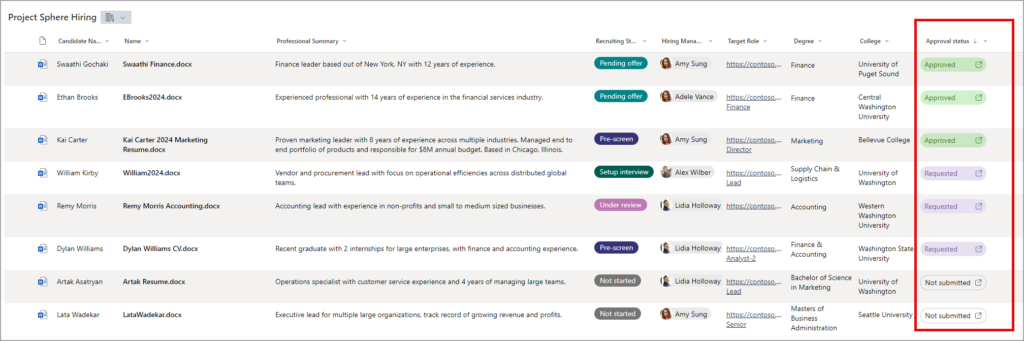
    This new feature allows users to start approvals within SharePoint. Users can also finish approvals entirely on the platform. This process eliminates the need for external workflows. Thus, teams can speed up approvals without leaving the platform, which enhances productivity for collaborative work.
  • Real-Time Status Tracking and Customisable Workflows
    This update includes real-time visibility into document status. It allows users to view each stage of the approval process. Additionally, customisable workflows allow organisations to tailor approvals. These approvals fit specific business needs or industry standards. This supports teams in finance, legal, and healthcare.

Microsoft Places: Redefining Hybrid Work Management

Microsoft Places is a new tool designed specifically for the evolving needs of hybrid work environments. Here’s how it streamlines hybrid workspace management.

  • Location-Based Scheduling and Workspace Reservations
    With Microsoft Places, employees can reserve desks based on their planned in-office days. They can also reserve meeting spaces. This feature ensures that employees have access to resources when needed. It also helps facilities teams manage office layouts more efficiently.
  • Real-Time Occupancy and Space Usage Data
    Microsoft Places provides real-time occupancy data. This information allows organisations to track workspace demand. They can adjust layouts as necessary. Hence, facilities managers can make data-driven decisions to reduce overcrowding and improve resource allocation.
  • Seamless Integration with Microsoft 365
    Places is part of the Microsoft 365 suite. It integrates naturally with other tools like Teams and Outlook. This integration allows employees to plan their hybrid workdays within a familiar environment. Thus, it removes the need for extra applications, making hybrid scheduling and resource management simpler.

Microsoft 365 Core Apps: Productivity Gains in Excel, Word, and PowerPoint

October’s updates for Microsoft 365’s core apps—Excel, Word, and PowerPoint—enhance usability and streamline productivity across projects.

  • Excel: Improved formulas and pivot table features support faster data analysis. These enhancements make Excel a more powerful tool for handling complex data.
  • Word: New collaborative editing tools and AI-driven suggestions enhance Word’s suitability for projects. These tools need team contribution and content creation. They reduce time spent on editing.
  • PowerPoint: AI-enhanced slide templates now offer layout recommendations, simplifying design tasks so that even non-designers can create polished presentations effortlessly.

These updates transform the core apps into highly intuitive tools. They are well-suited for teams focused on data analysis. They also help teams working on content creation and presentation building.

Microsoft CoPilot: Advanced AI-Powered Assistance Across Microsoft 365

CoPilot, Microsoft 365’s AI assistant, is now more deeply embedded across applications, simplifying tasks and speeding up workflows.

  • Data Insights and Content Generation in Excel and Word
    In Excel, CoPilot helps summarise data. It identifies patterns and generates insights. This makes it ideal for analysis-heavy roles. Similarly, CoPilot in Word drafts content based on user prompts, streamlining the writing process for reports, blogs, and other documents. Overall, this AI integration helps users focus on refining content rather than starting from scratch.
  • Automation of Repetitive Tasks
    CoPilot automates routine steps across Microsoft 365, freeing up time for higher-value work. For instance, it automates formula entry in Excel, while in Word, it can format content for readability. These time-saving functions are invaluable in fast-paced environments, where efficiency is crucial to keep productivity.

Why These October Updates Matter for Businesses

Microsoft 365’s October updates show the suite’s commitment to supporting productivity, security, and hybrid work. Here’s a closer look at how these changes help organisations:

  • Seamless Productivity with Integrated Tools
    The Unified Calendar in Teams helps reduce app switching. SharePoint’s in-library approval workflows also contribute to this goal. These tools keep users focused and improve productivity. Particularly for hybrid and remote teams, this integrated experience offers a seamless work environment that minimises disruptions.
  • Proactive Security Defences Against Phishing
    Outlook’s phishing reporting and Teams’ brand protection features reduce exposure to cyber threats. Microsoft 365 enables real-time threat reporting. It also provides secure incident response. This ensures a safer workspace for users. Sensitive data is safeguarded from evolving phishing tactics.
  • Efficient Hybrid Work Management with Microsoft Places
    Microsoft Places addresses hybrid work’s unique challenges by providing tools for workspace reservations. It also offers real-time occupancy monitoring. Additionally, it ensures efficient scheduling. With this data, organisations can make informed adjustments to office layouts, reducing overcrowding and optimising resource allocation.
  • AI-Driven Productivity Boost from CoPilot
    CoPilot’s AI assistance streamlines tasks for efficiency. It helps in content generation in Word. It also aids in data analysis in Excel. By automating repetitive work, CoPilot lets teams focus on strategic activities, adding value and saving time across departments.

Final Thoughts on the Microsoft 365 October Update

This October, Microsoft 365 demonstrates its commitment to driving innovation in productivity and security. The suite remains a crucial asset for organisations. It achieves this by integrating new tools like CoPilot, enhancing security features, and launching Microsoft Places. These improvements help organisations navigate hybrid work, remote collaboration, and data security.

Did your company’s software system once seem sleek and nimble? But now it resembles a tangled web of shortcuts, patches, and workarounds. Welcome to the realm of technical debt. It’s a silent saboteur that accumulates over time, threatening your efficiency.

What Is Technical Debt?

Think of technical debt as the interest you pay on a loan you never intended to take. Technical debt accumulates when companies choose shortcut IT solutions. Rather than better, longer, more sustainable ones. 

Initially, it seems harmless. But as your system grows, those hasty decisions compound. This slows down progress and creates future complications. 

Addressing technical debt is essential for maintaining a robust, efficient technology environment. Here are eight strategies to tackle technical debt at your company.

1. Identify and Prioritize Technical Debt

Identifying technical debt is the first step in managing it effectively. Focus on the most critical issues first. This drives you to focus on changes that bring the most value.

  • Conduct a Technical Debt Audit: Start by identifying where technical debt exists. Conduct an audit of your network infrastructure, and processes. Document areas where shortcuts or quick fixes have been used.
  • Categorize and Rank: Not all technical debt needs immediate attention. Categorize debt based on its impact on performance, security, and maintainability. Rank the most critical issues to address first. 
  • Create a Technical Debt Register: Maintain a register of all identified technical debt. This helps track what has been addressed and what still needs attention. 

2. Integrate Debt Management into Your Workflow

Incorporating debt management into your workflow ensures continuous attention to technical debt. This helps maintain a balance between new development and debt reduction.

  • Incorporate into Agile Practices: Integrate technical debt management into your agile processes. Regularly review and address these tasks during sprint retrospectives.
  • Set Aside Time for Repairs: Earmark time for repairs and technical debt reduction. This ensures that potential issues aren’t forgotten.
  • Track Progress: Regularly track progress on technical debt reduction. Use metrics to track improvements and identify areas still needing work. 

3. Educate and Train Your Team

Educating your team about technical debt is crucial. It helps prevent new debt and addresses existing issues. Training and knowledge sharing foster a culture of quality and long-term thinking.

  • Promote Awareness: Ensure your team understands the concept of technical debt. Promote awareness of its impacts on the system and future IT projects. 
  • Provide Training: Provide training on best practices for adopting new technology. Educate your team on how to avoid creating new technical debt. 
  • Encourage Knowledge Sharing: Encourage knowledge sharing within the team. Hold regular meetings to discuss technical debt and share solutions.

4. Improve Documentation

Good documentation is essential for understanding and addressing technical debt. It provides a clear reference for current and future team members.

  • Document Existing Systems: Create comprehensive documentation for your existing systems. This includes hardware configurations, software setups, and network diagrams.
  • Update Documentation Regularly: Ensure documentation is regularly updated. Include changes and improvements as they occur. 
  • Use Standardized Templates: Use standardized templates for documentation. This ensures consistency and completeness. Standardized documentation is easier to create, maintain, and use.

5. Regularly Update and Refactor Systems

Regular updates and system refactoring help keep technical debt under control. This involves making small, manageable changes to improve technology quality.

  • Plan Regular Updates: Plan regular updates to improve system quality. Schedule these updates during less busy times or between major projects. Regular updates help keep technical debt under control.
  • Focus on High-Impact Areas: Focus updating efforts on high-impact areas. Identify systems that are frequently used or critical to performance. 
  • Incremental Improvements: Approach updating as a series of incremental improvements. Make small, manageable changes rather than large overhauls. Incremental improvements are less risky and easier to deploy.

6. Optimize Security Practices

Optimized security practices ensure that changes do not introduce new issues. Comprehensive security measures help maintain system reliability and performance.

  • Install Comprehensive Security Measures: Deploy comprehensive security practices. This includes firewalls, encryption, and regular security audits. 
  • Use Proactive Security Practices: Adopt proactive security practices. Update security protocols and software. Proactive security helps catch issues early and ensures systems remain secure.
  • Automate Security Monitoring: Automate as much of the security monitoring process as possible. Automation increases efficiency and reduces the risk of human error.

7. Manage Dependencies

Effective dependency management reduces the risk of introducing technical debt. Keeping track of and updating dependencies ensures compatibility and security.

  • Track and Update Dependencies: Keep track of all dependencies in your technology environment. Update them to the latest versions. Updated dependencies often include security patches and performance improvements.
  • Use Dependency Management Tools: Use dependency management tools to handle dependencies. These tools help automate updates and ensure compatibility. 
  • Isolate Critical Dependencies: Isolate critical dependencies to reduce their impact. Ensure that critical components are well-documented and understood. 

8. Foster a Culture of Continuous Improvement

A culture of continuous improvement helps address technical debt proactively. Encourage learning, celebrating successes, and regular reflection. This drives ongoing enhancement.

  • Encourage Continuous Learning: Provide opportunities for professional development and skill enhancement. A knowledgeable team is better equipped to address and prevent technical debt.
  • Celebrate Successes: Recognize and reward efforts to improve IT quality and maintainability. Positive reinforcement fosters a culture of quality and continuous improvement.

Work with an IT Provider That Thinks Proactively

Addressing technical debt proactively ensures your systems remain scalable, maintainable, and secure. This enables your business to thrive in a competitive landscape.

Our technology team takes a proactive and long-term approach. We do things right the first time and don’t take shortcuts. This reduces the risk of accumulating technical debt.

Contact us today to schedule a chat about enhancing your IT systems.

Featured Image Credit

This Article has been Republished with Permission from The Technology Press.

Small businesses continue to be prime targets for cybercriminals. Why? Many assume they’re too small to attract attention. This assumption is dangerous. In fact, cybercriminals often view small businesses as easy targets. They tend to have fewer resources and less robust security measures than large enterprises. As we approach 2025, the cyber threat landscape is evolving rapidly. This article highlights the most common cyber threats small businesses will face. It also explains how to protect against them with help from Equate Group and the Cyber Essentials certification.

How to Protect Your Business:
  • Backup Regularly: Ensure you have up-to-date backups stored off-site. This can reduce downtime and help avoid paying a ransom.
  • Train Your Staff: Human error is the main cause of many attacks. Regular staff training helps spot suspicious emails and attachments. Equate Group provides managed IT services and training solutions to keep your team sharp.
  • Use Strong Antivirus Software: This acts as the first line of defence. Ensure it is updated regularly. Consult Equate Group for security software recommendations tailored to your needs.

2. Phishing Attacks: More Sophisticated in 2025

Phishing attacks are all about deception. Cybercriminals impersonate trusted organisations, tricking employees into handing over sensitive information. As AI tools become more available, phishing attacks are becoming even more convincing, with automated systems creating realistic, personalised scams.

How to Protect Your Business:
  • Educate Employees: Training is crucial. Show your employees how to spot phishing emails. Equate Group offers cybersecurity awareness training as part of its managed services.
  • Implement Two-Factor Authentication (2FA): Even if an attacker gets hold of a password, 2FA can block them from accessing accounts.
  • Use Email Filtering: Advanced email filters can help block phishing emails before they reach inboxes. Consult Equate Group to improve your email security.

3. Insider Threats: A Growing Risk

Insider threats—whether accidental or malicious—are becoming more of a concern. With many businesses embracing hybrid working models, more employees have access to sensitive systems from home. Insider threats are hard to detect and can be costly if not addressed swiftly.

How to Protect Your Business:
  • Monitor Access: Regularly review who has access to sensitive data. Ensure that only authorised personnel can access key systems.
  • Limit Access Privileges: Not everyone in your organisation needs full access. Follow the principle of least privilege: employees should only have the access they need to do their jobs.
  • Regular Audits: Conduct regular security audits to ensure there are no unusual activities or access patterns. Equate Group’s managed IT services include ongoing audits and monitoring.

4. Business Email Compromise (BEC): A Continued Threat in 2025

BEC attacks are becoming more refined and convincing. Criminals impersonate high-level executives or trusted business partners, tricking employees into making unauthorised payments or handing over sensitive information. As criminals use more advanced social engineering techniques, these attacks are getting harder to spot.

How to Protect Your Business:
  • Verify Requests: Always verify payment or sensitive data requests via another communication method, like a phone call.
  • Secure Executive Accounts: Ensure executive accounts are protected by strong passwords and two-factor authentication.
  • Use Digital Signatures: Encourage the use of digital signatures to authenticate emails from key executives. Contact Equate Group to set up secure communication systems for your leadership team.

5. Malware: New Variants on the Rise

While malware is nothing new, the threats continue to evolve. In 2025, we’re seeing new variants designed to bypass traditional security measures and exploit zero-day vulnerabilities. As more businesses rely on cloud services, hackers target cloud infrastructures. They use malware to infiltrate and disrupt critical systems.

How to Protect Your Business:
  • Install Software Updates: Ensure that all software, including operating systems and applications, is up-to-date with the latest security patches.
  • Deploy Firewalls: Firewalls act as a barrier between your internal network and potential threats from the internet.
  • Implement Endpoint Protection: Each device in your business is a potential entry point for malware. Use endpoint protection solutions to safeguard every device. Speak with Equate Group for tailored advice on keeping your endpoints secure.

6. Distributed Denial-of-Service (DDoS) Attacks: Increasingly Common in 2025

DDoS attacks, which overwhelm websites or online services with traffic until they crash, are becoming easier for criminals to launch. In 2025, even small businesses with moderate online activity are at risk. While these attacks don’t steal data, they can cause significant financial loss due to prolonged downtime.

How to Protect Your Business:
  • Use a Content Delivery Network (CDN): CDNs can help distribute traffic across multiple servers, making it harder for attackers to overwhelm a single point.
  • Monitor Network Traffic: Set up systems to detect unusual spikes in traffic that could signal an incoming attack.
  • Develop a Response Plan: If your business relies heavily on online services, have a DDoS response plan in place to minimise disruption. Equate Group can help you develop a plan that keeps your business online during an attack.

7. Weak Passwords: Still a Security Risk in 2025

Despite advances in technology, weak or reused passwords remain a significant risk. Many employees still use simple passwords, or worse, the same password across multiple accounts. Attackers are using AI and machine learning to crack weak passwords faster than ever.

How to Protect Your Business:
  • Enforce Strong Password Policies: Require employees to use complex passwords that include letters, numbers, and special characters.
  • Implement a Password Manager: Password managers generate and store strong, unique passwords for every account, reducing the risk of reuse.
  • Use Multi-Factor Authentication (MFA): MFA adds an extra layer of protection. It requires another verification step beyond just a password. Consult Equate Group to integrate strong authentication systems with your existing infrastructure.

8. IoT (Internet of Things) Vulnerabilities: An Expanding Attack Surface

In 2025, the rise of IoT devices continues, from smart thermostats to connected security cameras. However, many of these devices come with weak security features, opening up new vulnerabilities for businesses. Cybercriminals can exploit these weaknesses to gain access to your broader network.

How to Protect Your Business:
  • Secure IoT Devices: Change default passwords on all IoT devices and ensure they are regularly updated.
  • Segment Your Network: Isolate IoT devices on a separate network from your core business systems.
  • Monitor Devices: Keep an eye on unusual activity from IoT devices, which could indicate a breach. Equate Group can assist in securing your IoT environment and maintaining constant monitoring.

9. Social Engineering: More Advanced by 2025

Cybercriminals are becoming more skilled at manipulating human behaviour to gain access to secure systems. Social engineering tactics—whether through fake phone calls, messages, or even in-person attempts—are increasingly sophisticated, often exploiting trust and urgency.

How to Protect Your Business:
  • Train Employees: Awareness is key. Train employees on social engineering tactics and encourage them to verify the identity of anyone requesting sensitive information. Equate Group offers comprehensive training programmes designed to protect your team from social engineering attacks.
  • Limit Public Information: Be cautious about the amount of personal or company information shared on social media or public platforms.
  • Create a Security Culture: Foster an environment where employees feel comfortable reporting suspicious activities. Encourage them to report even if they are unsure whether something is genuinely malicious.

Cyber Essentials: A Must-Have by 2025

As the cybersecurity landscape becomes more complex, achieving Cyber Essentials certification is one of the best steps your business can take. Cyber Essentials is a government-backed scheme that helps businesses protect themselves against common cyber attacks. Certification shows customers, partners, and suppliers that your business takes cybersecurity seriously.

At Equate Group, we specialise in helping small businesses achieve Cyber Essentials certification. Our team can guide you through the process, ensuring your business meets the necessary requirements to stay protected and compliant in 2025.

Conclusion: Preparing for 2025

Cybersecurity threats are becoming more sophisticated as we move into 2025. Small businesses must recognise they are not immune and take proactive steps to secure their operations. With proper training, robust security tools, and regular updates, companies can mitigate the risks and keep their data safe. Don’t wait for an attack. Contact Equate Group today to discuss your cybersecurity needs. Learn how we can help you prepare for the future. Our team can also help with achieving Cyber Essentials certification, ensuring you meet the highest security standards.


In the whirlwind of today’s business landscape, adaptability reigns supreme. Today’s workspaces transcend physical boundaries. Employees work and collaborate seamlessly from anywhere. Whether they’re sipping coffee at a local café or lounging on their living room couch. That’s the magic of a mobile-optimized workspace. It’s a game-changer for productivity and performance.

51% of employees use company-mandated apps when working via mobile devices.

Why Optimize for Mobile?

The modern workforce dances to a different beat. Gone are the rigid 9-to-5 shackles; instead, employees crave flexibility. They want to switch effortlessly between their trusty desktops and pocket-sized smartphones. Allowing them to tackle tasks wherever inspiration strikes. 

A mobile-optimized workspace isn’t a luxury. It’s the power to foster a thriving, engaged team. Enabling mobile-friendly work is about supercharging productivity and nurturing employee happiness. Keep reading to explore the art of crafting a mobile-first environment.

Core Components of a Mobile-Optimized Workspace

  1. Cloud-Based Everything: Shift your operations to the cloud. This ensures seamless access to files, applications, and collaboration tools from any device.
  2. Mobile-First Applications: Develop or choose applications that focus on mobile experiences. Ensure they are intuitive, responsive, and offer the same functionality as desktop versions.
  3. Robust Collaboration Tools: Equip your team with powerful collaboration tools. Tools designed for mobile use. Features like real-time editing, file sharing, and video conferencing are essential.
  4. Secure Mobile Device Management: Install robust security measures. The goal is to protect sensitive company data on mobile devices. This includes encryption, remote wipe capabilities, and regular security updates.
  5. Employee Training: Invest in training programs. Equip employees with the skills to effectively use mobile devices for work.

Benefits of a Mobile-Optimized Workspace

  • Increased Productivity: Employees can work from anywhere, at any time. This boosts efficiency and work-life balance.
  • Enhanced Collaboration: Real-time collaboration tools foster teamwork and knowledge sharing.
  • Improved Decision Making: Access to data and insights on the go empowers employees. It helps them make informed decisions quickly.
  • Attracting Top Talent: A mobile-first approach appeals to a younger, tech-savvy workforce.
  • Cost Savings: Reduces reliance on physical office space and associated costs.

Challenges and Considerations

While the benefits are clear, creating a mobile-optimized workspace isn’t without challenges.

  • Security Risks: Increased device usage means a larger attack surface. Put in place robust security measures to protect sensitive data.
  • Employee Distractions: Mobile devices can be a distraction. Encourage employees to use focus modes or apps to reduce interruptions.
  • Data Usage: Be mindful of data consumption. This is especially true for employees on limited data plans. Consider providing mobile hotspots or Wi-Fi allowances.
  • Device Management: Managing a fleet of mobile devices can be complex. Consider using mobile device management (MDM) solutions to streamline the process.

Tips to Secure Your Mobile Workspace

Use Mobile Device Management (MDM)

Mobile Device Management (MDM) software helps secure and manage mobile devices. It allows you to enforce security policies, manage applications, and protect data. Using MDM ensures your mobile devices are secure and compliant.

MDM software also is a necessity for BYOD. These tools can secure the “business side” of an employee’s device. Making working via mobile more convenient for your team.

Use Strong Authentication Methods

Use strong authentication methods to protect your mobile workspace. This includes multi-factor authentication (MFA) and biometric authentication. Strong authentication reduces the risk of unauthorized access and data leaks.

Encrypt Data

Encrypt data on mobile devices to protect sensitive information. This includes emails, documents, and communication. Encryption ensures that data remains secure, even if a device is lost or stolen.

Secure a business VPN plan. VPNs can help ensure data transmission remains secure. This is the case no matter where your employees are working from.

Measure and Improve Performance

Set Clear Goals

Set clear and achievable goals for your employees. This provides direction and motivation. Clear goals help employees focus on their tasks while working via mobile. It also lets them know what the boundaries are for data and business apps.

Use Performance Metrics

Use performance metrics to track progress and identify areas for improvement. This includes productivity, quality of work, and engagement levels. Regularly reviewing performance metrics helps you make informed decisions.

Provide Regular Feedback

Provide regular feedback to your employees. This includes positive reinforcement and constructive criticism. Regular feedback helps employees understand their strengths and areas for improvement. 

Need Help Managing a Mobile-Friendly Workspace?

Enhancing employee performance with a mobile-optimized workspace involves several strategies. But there is definitely a payoff. Encouraging a mobile-friendly workspace boosts performance. It also improves job satisfaction and employee retention.

Need some help putting a mobile device management system in place? Looking for IT support to move your legacy systems to more mobile-optimized solutions? Our team of business technology experts is at your service.

Contact us today to schedule a chat about modernizing your business tools.

Featured Image Credit

This Article has been Republished with Permission from The Technology Press.

In Part 1 of this series, we explored why Cyber Essentials is critical for your business in 2024. In Part 2, we delved into success stories and the impact of Cyber Essentials. Now, in Part 3, we’re looking forward—examining how Cyber Essentials can protect your business in the years ahead and how continuous compliance, with insurance from Equate Group, future-proofs your cybersecurity.

Cyber Essentials: Your Long-Term Defence Strategy

Cybersecurity isn’t static. As threats evolve, so must your defences. Cyber Essentials, as discussed in Parts 1 and 2, provides a foundation of protection against 99% of internet-originating vulnerabilities GOV.UK

But it’s not enough to get certified once. Businesses need a long-term strategy to ensure continuous protection. That’s where Equate Group’s continuous compliance service comes in.

With continuous compliance, Equate Group ensures your business stays certified, updated, and ready for whatever threats the future holds. No need to worry about falling behind on the latest cybersecurity developments—Equate manages it for you.

Cyber Insurance: A Financial Safety Net

Equate Group’s Cyber Essentials with continuous compliance doesn’t just offer protection from cyber-attacks—it also comes with up to £100K of insurance to cover potential damages. If you upgrade to Cyber Essentials Plus, your insurance coverage increases to £250K. This financial safety net ensures that if an attack does slip through your defences, your business can recover without bearing the full financial burden.

Insurance in the cybersecurity world is crucial. The Cyber Essentials Impact Evaluation shows that certified businesses experience fewer cyber insurance claims and see lower premiums GOV.UK

This means that adopting Cyber Essentials isn’t just good for security—it’s good for your bottom line.

Why Continuous Compliance Matters

Cyber Essentials certification isn’t a one-time achievement. Cyber threats are constantly evolving, and your security measures need to keep pace. The Cyber Essentials Impact Evaluation highlights that businesses maintaining their certification are far better equipped to handle future threats GOV.UK.

Equate Group’s continuous compliance service ensures that your business stays ahead of these changes. With regular reviews, monitoring, and updates, you’ll always meet the latest security standards. Plus, continuous compliance keeps your insurance coverage intact, ensuring ongoing protection from both a technical and financial perspective.

Upgrading to Cyber Essentials Plus: Stronger Protection, Bigger Benefits

Cyber Essentials is a fantastic starting point, but for businesses that handle more sensitive data, Cyber Essentials Plus offers a higher level of protection. With Cyber Essentials Plus, your systems undergo independent verification to ensure your security measures are truly effective. The Impact Evaluation found that businesses upgrading to Cyber Essentials Plus gained even greater confidence in their ability to fend off attacks GOV.UK.

The upgrade isn’t just about peace of mind—it also boosts your insurance coverage to £250K. This means you’re financially covered in the event of a more severe cyber incident, providing a deeper level of security for your business.

Safeguard Your Business Reputation with Cyber Essentials

In today’s world, a data breach doesn’t just result in financial loss—it can destroy your business’s reputation. The Cyber Essentials Impact Evaluation found that certified businesses enjoy greater trust from their customers GOV.UK

In industries where security is a non-negotiable, certification can make or break your business relationships.

Being Cyber Essentials certified shows clients, suppliers, and partners that you take cybersecurity seriously. It demonstrates that you’ve taken proactive steps to protect their data, making you a more attractive partner for future projects. For many businesses, this is the key to winning contracts and staying competitive.

The Financial Benefits: Insurance and More

Equate Group’s Cyber Essentials certification packages don’t just provide security—they come with built-in insurance coverage to help your business recover financially from any breaches. Whether you choose the £100K insurance plan with continuous compliance or the £250K insurance plan with Cyber Essentials Plus, you’ll have peace of mind knowing that financial backup is available. 

The Impact Evaluation revealed that businesses certified under Cyber Essentials see fewer cyber insurance claims GOV.UK, which means you’re likely to enjoy lower premiums too. So, not only does Cyber Essentials protect your business—it helps save you money.

Supply Chain Security: Why Certification is a Must-Have

Increasingly, large organisations are requiring their suppliers to be Cyber Essentials certified. The Cyber Essentials Impact Evaluation highlighted how certification played a “crucial role in securing contracts and maintaining business relationships” GOV.UK

With supply chain attacks on the rise, being Cyber Essentials certified reassures your partners that you won’t be the weak link.

For businesses looking to grow, certification is becoming a mandatory requirement. If you want to ensure your business remains competitive in the future, Cyber Essentials certification isn’t just a good idea—it’s a must.

Future-Proofing Your Business with Equate Group

Looking ahead to 2025 and beyond, the threat landscape will only grow more complex. But with Cyber Essentials and continuous compliance from Equate Group, your business will be ready. Equate Group helps you stay on top of the latest security requirements, ensuring your systems are always protected.

The Cyber Essentials Impact Evaluation suggests that the programme will continue to evolve to meet new challenges GOV.UK

With Equate Group’s continuous compliance service, your business will evolve right alongside it, ensuring you’re always prepared for the next wave of cyber threats.

Final Thoughts: Secure Your Future with Equate Group

Cyber Essentials is more than just a certification—it’s your business’s first step toward long-term security. With up to £100K of insurance for Cyber Essentials certification and up to £250K when upgrading to Cyber Essentials Plus, Equate Group provides comprehensive protection that goes beyond compliance.

If you’re ready to take the next step in securing your business, contact Equate Group today. Let us guide you through the process, from certification to continuous compliance, ensuring your business stays protected no matter what the future holds.

Secure your organisation today!

Learn more about how Cyber Essentials can safeguard your business and give you the competitive edge you need in today’s fast-changing digital world

Get Started now!

Cyber Essentials: What’s the Story So Far?

In the world of cybersecurity, Cyber Essentials has become a bit of a superstar. The Cyber Essentials Impact Evaluation revealed that businesses adopting this framework experienced a significant reduction in successful cyber-attacks. Let’s be honest—anything that stops 99% of internet-originating vulnerabilities deserves applause GOV.UKBut like any good story, there’s more to it than just stats. The journey to adopting Cyber Essentials has had its ups, downs, and everything in between.

At its core, Cyber Essentials is about awareness. The evaluation highlights that certified businesses are more aware of cyber threats compared to their uncertified counterparts. This isn’t just about ticking boxes or complying with regulations—it’s about transforming your business into a fortress that stands resilient in the face of growing cyber threats.

The Impact: More Than Just Cyber Protection

Here’s where Cyber Essentials goes from “just another security measure” to “a game-changer.” 

The Impact Evaluation shows that 76% of certified organisations didn’t just stop at the basic controls—they went further GOV.UK

These businesses took Cyber Essentials as the foundation for a more robust cybersecurity strategy.

It’s like discovering that, after installing your top-notch home security system, you’re suddenly more aware of other ways to improve your home’s safety. Once businesses started with Cyber Essentials, many implemented additional protective measures, from sophisticated endpoint security to more rigorous access controls.

And it’s not just about internal improvements. The evaluation shows Cyber Essentials has played a “pivotal role in securing contracts” GOV.UK. Certified organisations were seen as more trustworthy, opening doors to new business opportunities. 

So, in a world where trust is everything, certification could be the difference between landing a major deal or losing out.

Overcoming the Challenges: Not All Smooth Sailing

Let’s not sugar-coat it—implementing Cyber Essentials isn’t without its challenges. The Cyber Essentials Impact Evaluation points out that many businesses found certain aspects of the process difficult, particularly understanding the technical requirements GOV.UK

Small businesses, in particular, felt the pinch, as many lacked dedicated IT teams to manage the changes.

But here’s the thing: overcoming these challenges made the success stories all the more powerful. Businesses that pushed through these obstacles found the process rewarding in the long run. According to the report, those who stuck with it saw a measurable improvement in their cyber resilience. This isn’t just a quick fix—it’s a long-term investment in your company’s safety and growth. Talk to recognised experts like Equate Group and let us help guide you through

The real success comes when businesses stop viewing cybersecurity as an afterthought and start seeing it as a critical part of their operations. Those that embraced the Cyber Essentials journey didn’t just solve a problem—they created a culture of security.

Cyber Insurance: The Unsung Hero of Cyber Essentials

One of the more unexpected benefits of Cyber Essentials comes in the form of cyber insurance.

Now, insurance might not be the most glamorous part of the cybersecurity story, but it’s an important one. The Impact Evaluation shows that businesses with Cyber Essentials certification experienced up to 80% fewer cyber insurance claims GOV.UK.

Why? Because these businesses were simply better protected.

For many, cyber insurance is a must-have, especially with the rising costs associated with data breaches. But insurance premiums can be expensive, particularly for businesses that are perceived as high-risk.

Cyber Essentials reduces that risk, which translates to lower premiums and fewer claims. It’s a win-win: your business is safer, and you’re saving money on insurance.

The Hidden Benefits: More Than Just Security

Here’s where Cyber Essentials gets even more interesting. Beyond the obvious benefits of increased security and business growth, certified organisations have reported other perks, too. The Impact Evaluation revealed that businesses with Cyber Essentials experienced “improved operational efficiency” GOV.UK.

That’s right—by streamlining their security processes, these companies weren’t just becoming more secure; they were running smoother overall.

Think of it this way: by focusing on the five key controls of Cyber Essentials, businesses are tightening up their operations, eliminating redundancies, and improving how their teams manage IT security. It’s like decluttering your workspace—you end up working more efficiently once everything is in order.

What’s Next? How Cyber Essentials Evolves with Your Business

Here’s the twist—Cyber Essentials isn’t a one-time solution. The Impact Evaluation makes it clear that while Cyber Essentials is a powerful first step, it’s also part of an ongoing journey GOV.UK

As cyber threats evolve, so too must your defences. Cyber Essentials provides the foundation, but it’s up to businesses to build on it.

Many organisations are using Cyber Essentials as a stepping stone toward more advanced certifications, such as Cyber Essentials Plus or even ISO 27001. These certifications take the basic principles of Cyber Essentials and supercharge them with deeper, more rigorous controls. The businesses that thrive in this new age of cyber threats are the ones that recognise the need for continuous improvement.

Building a Culture of Security (Not Just a Checklist)

Here’s the final takeaway: Cyber Essentials is more than a checklist. It’s about embedding a culture of security within your organisation. The Impact Evaluation highlights that businesses that take Cyber Essentials seriously tend to see a shift in how they approach security as a whole GOV.UK

It’s no longer seen as a “nice-to-have” or a one-off project—it becomes a core part of their operations.

This culture shift is critical in a world where cyber threats are constantly evolving. Having a culture of security means that your employees, your systems, and your processes are all aligned toward one goal: keeping the business safe.

Final Thoughts: Let Equate Group Help You on Your Cyber Essentials Journey

Cyber Essentials has proven itself as a vital tool for businesses looking to secure their future. But here’s the thing—it’s not something you should tackle alone. At Equate Group, we’ve helped countless businesses navigate the challenges and reap the benefits of Cyber Essentials certification. Whether you’re a small business without an IT team or a larger organisation looking to strengthen your cyber defences, we’re here to guide you through the process.

Contact us today to get started on your Cyber Essentials journey. From initial assessment to full implementation, we’re here to make sure your business stays secure, compliant, and ready for whatever cyber threats lie ahead.

Secure your organisation today!

Learn more about how Cyber Essentials can safeguard your business and give you the competitive edge you need in today’s fast-changing digital world

Get Started now!

Cybersecurity is no longer a luxury reserved for large corporations. Every business, no matter its size, faces cyber threats. Cyber Essentials, the UK government’s flagship cybersecurity scheme, is designed to arm your business with a robust set of protections against the most common attacks. And if you think cyber criminals aren’t interested in your business, think again.

The Cyber Essentials Impact Evaluation reveals that certified organisations are significantly better off. They are better positioned to handle attacks, with the programme mitigating “up to 99% of internet-originating vulnerabilities” GOV.UK.

Think of it this way: without Cyber Essentials, your business is like a house with no locks—open and vulnerable to opportunistic thieves.

But Cyber Essentials isn’t just about defence. It’s about confidence. The evaluation found that 91% of certified businesses reported feeling more secure about their cyber posture. Whether you’re in retail, healthcare, or any other industry, being confident in your ability to repel cyber-attacks is crucial for operational continuity.

Is Cyber Essentials Worth It? The True Value of Cyber Defence

Let’s talk cost. Is Cyber Essentials worth the investment? The answer is a resounding yes. The Cyber Essentials Impact Evaluation confirms that businesses that certify reduce their risk of breach significantly and experience fewer cyber insurance claims GOV.UK.


Fewer breaches mean less downtime, fewer legal issues, and most importantly, lower costs. So, when you look at the upfront investment, it’s easy to see how it pays for itself many times over.


If you’re still on the fence, consider this: what is the cost of doing nothing? Cybercriminals don’t care if your business is small or lacks a dedicated IT team. They look for vulnerabilities—any weak spot to exploit. Cyber Essentials fills those gaps. Not getting certified is like playing with fire; it’s not a matter of if you’ll get burned but when.

Cyber Essentials and the 5 Key Controls that Fortify Your Defence

Cyber Essentials is built around five core controls, each designed to address specific weaknesses that cybercriminals often exploit. Think of these as the foundation of a sturdy digital fortress:

  1. Firewalls: Your first line of defence. They decide what enters and exits your network, keeping malicious actors out while letting the good traffic in.
  2. Secure Configuration: This ensures your systems are properly set up and secured from the moment they go online. Leaving your systems on default settings is like moving into a house and leaving the front door wide open.
  3. User Access Control: Only those who need access to sensitive areas of your network should have it. It’s like making sure the keys to your safe are only in trusted hands.
  4. Malware Protection: Protecting your business from viruses, spyware, and other malicious software is like installing a security system that detects and prevents unwanted intrusions.
  5. Patch Management: Regularly updating your software is essential. The Cyber Essentials Impact Evaluation warns that out-of-date systems are a hacker’s best friend GOV.UK. Think of patches like regular maintenance on your car—they prevent breakdowns and ensure everything runs smoothly.

By implementing these five simple but powerful controls, you can reduce your exposure to the vast majority of attacks. It’s not about complicated IT theory—it’s practical, common-sense defences that make a real difference.

The Business Benefits of Cyber Essentials: More Than Just Security

Cyber Essentials isn’t just about reducing the risk of attack. It also offers a competitive edge. The Cyber Essentials Impact Evaluation shows that certified businesses gain more trust from customers and are more likely to win contracts GOV.UK

In sectors where security is crucial—like finance, healthcare, and government contracting—being Cyber Essentials certified could be the deciding factor in whether you land a deal.

And it’s not just customers who are paying attention. Increasingly, supply chains are demanding higher levels of cybersecurity from their partners. Cyber Essentials is the proof that you’re serious about protecting data. The evaluation revealed that certification played a “crucial role in securing contracts and retaining clients” for many businesses GOV.UK

In today’s digital world, trust is everything. If your clients can’t trust you with their data, they’ll go elsewhere.

The Future of Cyber Threats: Why You Need to Stay Ahead

If you think today’s cyber threats are bad, buckle up for 2025 and beyond. The Cyber Essentials Impact Evaluation paints a clear picture—cybercriminals are getting smarter and their attacks more sophisticated GOV.UK

It’s no longer enough to rely on basic antivirus software or hope that you won’t be targeted. Hackers are constantly evolving their tactics, and businesses need to keep up.

This is where Cyber Essentials comes into its own. It’s designed to grow with the threat landscape, evolving to address new vulnerabilities as they arise. By getting certified now, you’re not just protecting against today’s attacks—you’re future-proofing your business for tomorrow’s threats. The evaluation highlights how certified businesses are far better prepared to withstand future cyber-attacks GOV.UK

Cybersecurity isn’t a one-and-done deal. It’s an ongoing commitment to keeping your business safe. And that’s exactly what Cyber Essentials delivers.

Cyber Essentials: A Smart Investment with Strong ROI

When considering the cost of Cyber Essentials, think of it as an investment, not an expense. The Impact Evaluation confirms that businesses with Cyber Essentials saw “significant reductions in cyber insurance claims” GOV.UK

This isn’t just about ticking a box for compliance—it’s about protecting your bottom line. Reduced claims, fewer breaches, less downtime—it all adds up to a healthier business.

The price of certification pales in comparison to the potential financial and reputational damage of a data breach. According to the report, businesses that fail to implement basic cybersecurity measures often pay the price in terms of lost revenue and customer trust. On the flip side, certified businesses not only reduce their risk but also enjoy better pricing on cyber insurance policies.

Cyber Essentials: Your Key to a Secure Future

Cyber Essentials isn’t just a government scheme—it’s your gateway to a more secure and successful future. If you’re not certified, you’re leaving your business open to attack. The Cyber Essentials Impact Evaluation shows that this scheme can dramatically reduce your risk, boost customer confidence, and future-proof your business GOV.UK


But here’s the thing—you don’t have to tackle this alone. At Equate Group, we specialise in helping businesses navigate the certification process with ease. From initial assessments to full implementation, we guide you through every step, ensuring your business is fully protected. Whether you’re looking to start from scratch or need to overhaul your current cybersecurity measures, we’ve got you covered.

Contact Equate Group today to learn more about how Cyber Essentials can safeguard your business and give you the competitive edge you need in today’s fast-changing digital world. Don’t wait for a cyber attack to knock on your door—act now, and lock it down before it’s too late.

Secure your organisation today!

Learn more about how Cyber Essentials can safeguard your business and give you the competitive edge you need in today’s fast-changing digital world

Get Started now!